An idea became a real paid online business.
Wedding Officiant Starter did not begin as a finished company. It began with a simple idea: teach beginners how to become wedding officiants and give them the tools they would need to actually do the job. Then the pieces were built one at a time.
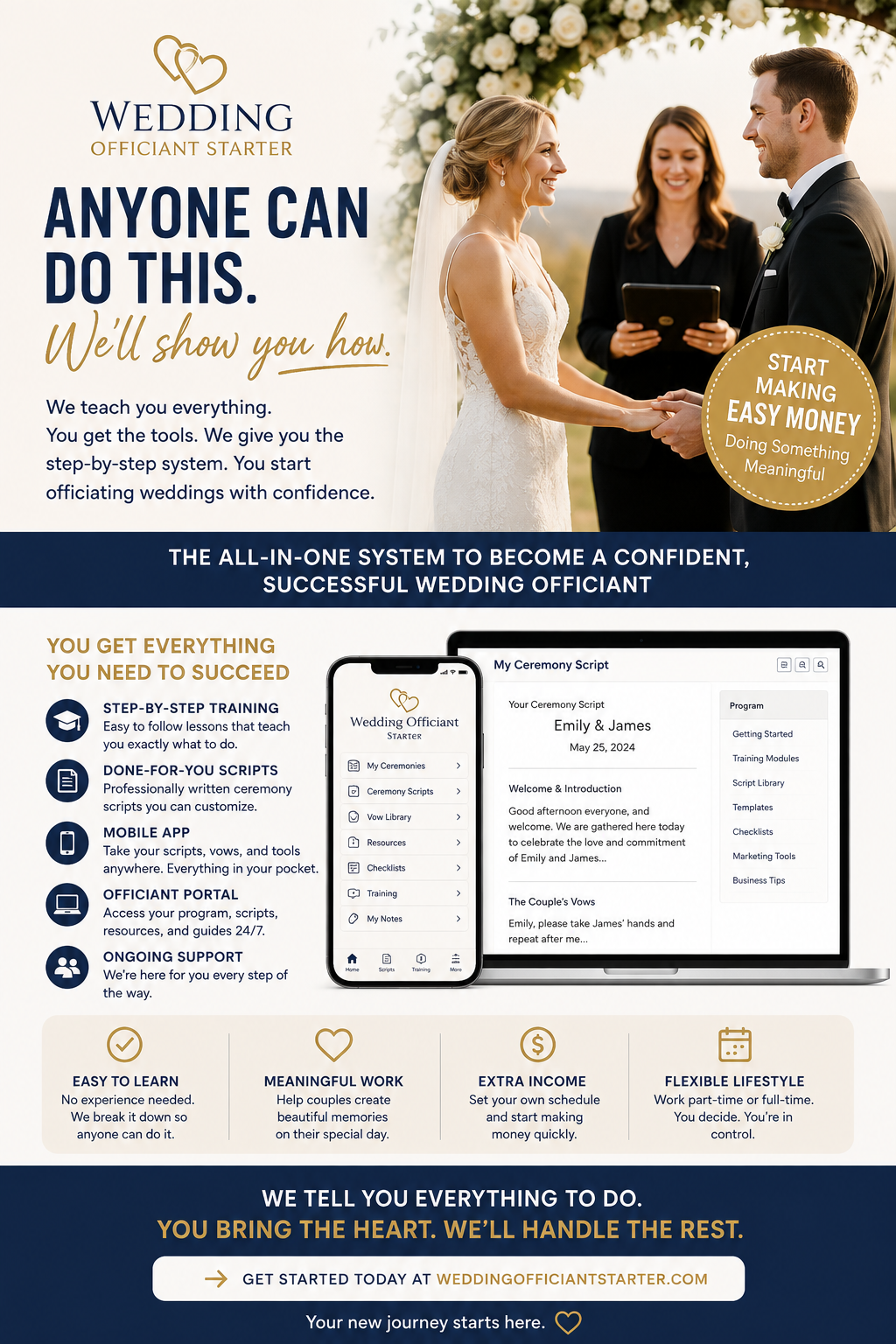
It does more than explain an idea.
A business needs something useful to offer, a way for customers to understand it, a way to pay, a way to receive what they bought, and a way to get help when something goes wrong. Wedding Officiant Starter grew to include all of those pieces.
What had to exist before it felt like a real business?
🌐 Public website
A public sales and training site explains what the system teaches, who it is for, what the customer receives, and why it is useful.
💳 Payment & access
A payment and verification path lets a visitor become a paying student and receive the correct private access.
🔐 Private Student Center
Students receive step-by-step training modules, practice and download materials, a wedding-day checklist, a couple questionnaire, and customer-finding guidance.
🧰 Full Script Builder
The web and phone-friendly builder turns names and ceremony choices into a usable wedding script rather than only providing a static course.
📱 Android + Windows
The tools expanded into a downloadable Android app and a Windows desktop version so students have more than one way to work.
📣 Promotion & support
Marketing guidance, troubleshooting instructions, and a final demo video help people understand what they receive and successfully use it.
One missing piece led to the next.
This is the same One Click at a Time pattern: build one piece, test it, notice what is missing, then solve the next problem.
Start with a problem worth solving
New officiants need more than encouragement. They need to know what to do, what to say, how to prepare, and how to handle the wedding-day paperwork and ceremony.
Turn the knowledge into an offer
The idea became a training system with a clear promise: help a beginner learn the process and give them practical tools they can actually use.
Build the public website
The website became the storefront. It explains the offer, establishes credibility, answers questions, and gives a visitor a path to become a customer.
Create the paid/private delivery area
The Student Center became the place where customers receive the real value: training, builders, guides, downloads, and private resources.
Build tools instead of only writing lessons
The wedding script builders let a student enter names, choose optional ceremony sections, and produce a script. That makes the product more useful than a static course.
Make the tool easier to carry and use
Android, phone-browser, and Windows desktop versions gave students practical choices for building and using their scripts.
Turn problems into product improvements
When Android installation warnings confused users, the fix was not to ignore the problem. A visual installation guide was created and added to the Student Center.
Keep the business working and explain the offer
SSL, backups, protected files, search visibility, links, mobile testing, customer-finding guidance, and a final promotional/demo video all became part of the finished system.
The product was not finished just because the app worked.
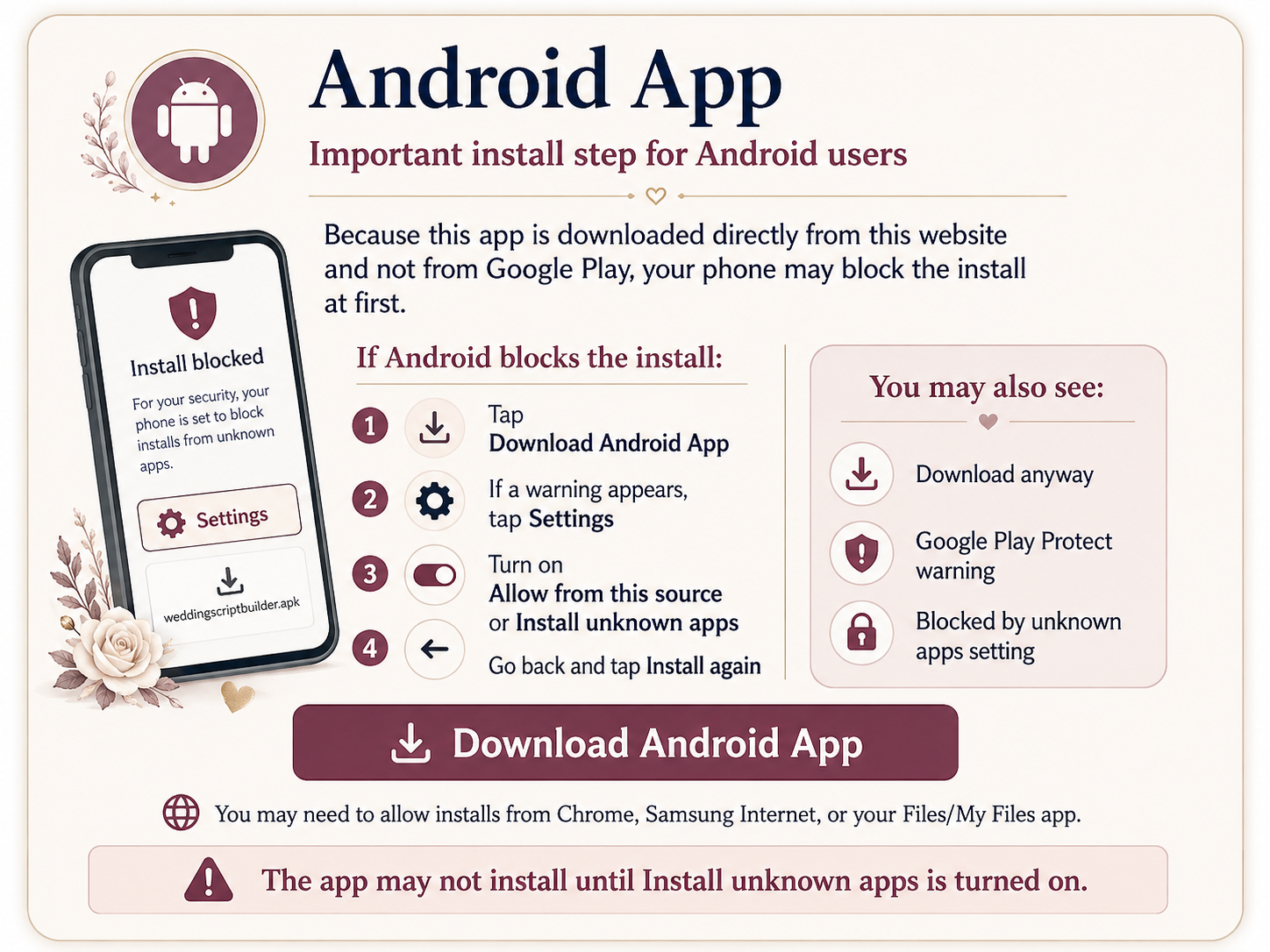
What happened?
Some Android users could see a warning because the app was being installed outside a traditional app store. That could make a perfectly good download feel broken to a beginner.
What the business had to do: explain the warning, show where to tap, show how to allow the specific installation source, and explain what might appear next.
That troubleshooting guide became part of what customers receive. A real business is not only the thing you sell—it is also the experience of helping someone successfully use it.
Do not copy the wedding business. Copy the process.
1. Find one useful problem
Ask what you know how to help someone do. The first business idea can be small and specific.
2. Build the simplest working version
Website first, one useful tool, one delivery method. Do not wait for a giant perfect system.
3. Improve from real problems
Every confusing screen, broken link, failed download, or customer question can show you what the product needs next.
A small business can begin with one useful idea.
You do not need to know every piece at the beginning. Build the first useful thing, test it with real people, and let each new problem tell you what to build next.
Choose another real lesson